
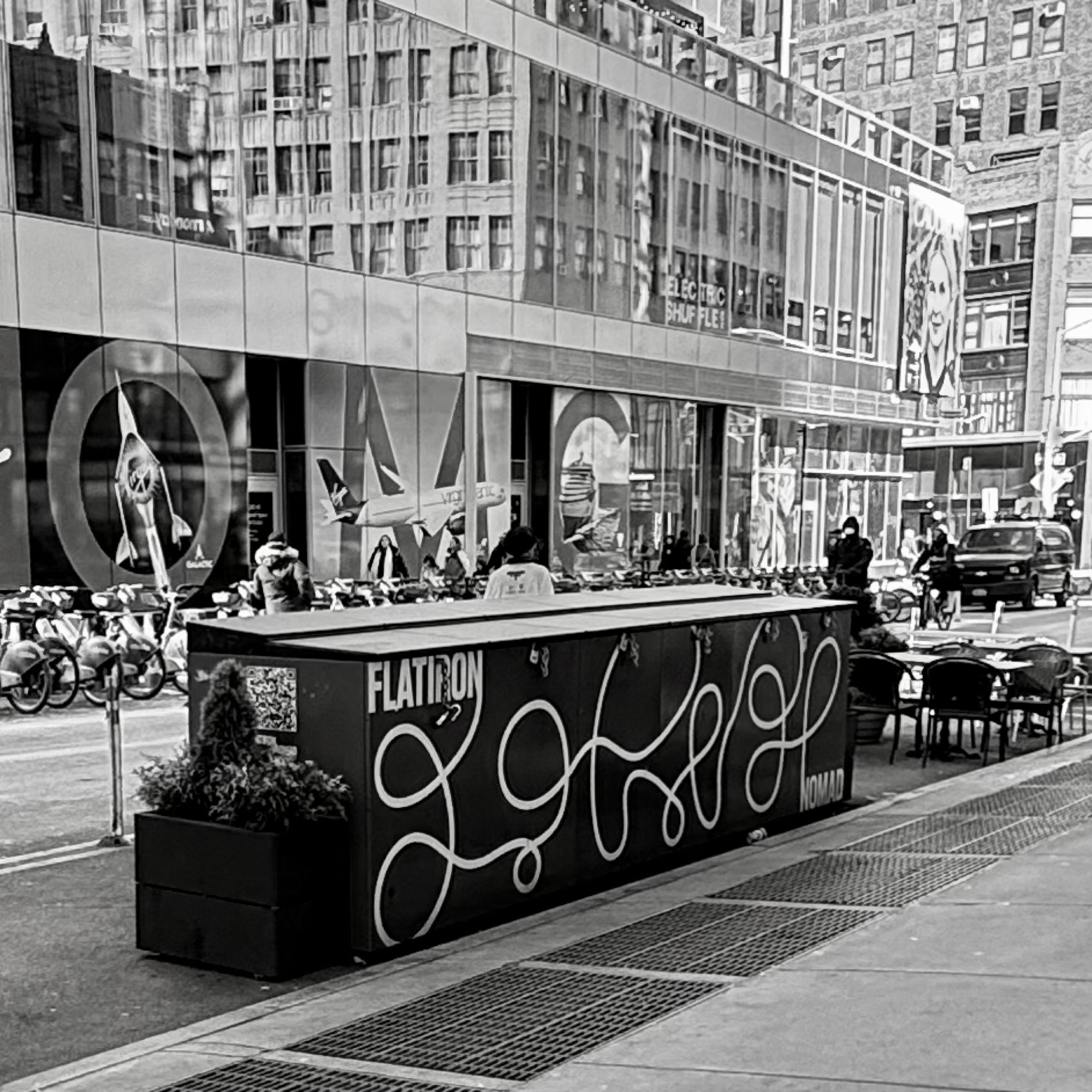


Description
CitiBin provides containerized storage for trash and recycling, offering a secure and weather-resistant alternative to loose waste piles. By enclosing waste in structured bins, CitiBin reduces litter spillage, keeps sidewalks clear, and deters pests. NYC agencies, Business Improvement Districts (BIDs), and private property owners install CitiBins in high-traffic areas to manage waste more efficiently and reduce trash pileups on sidewalks.
Identification
- Shape: Rectangular enclosures with hinged lids and front-access doors.
- Material: Weather-resistant aluminum, composite panels, and stainless steel hardware.
- Color: Typically gray, black, or natural wood finishes.
- Markings: BIDs, NYC Parks, or other sponsors may wrap bins with branded signage.
Habitat
CitiBins appear in sidewalk-adjacent spaces, pedestrian plazas, and commercial corridors, where property owners or city agencies seek to organize waste and prevent sidewalk obstructions.
Range
Currently installed across New York City where trash density is high.
Examples


Discussion
CitiBin helps reduce visible waste and makes urban spaces cleaner by keeping trash enclosed until collection. The secure design prevents windblown litter and restricts access to rodents. NYC’s Department of Sanitation (DSNY) is evaluating CitiBin and similar solutions as part of a broader effort to systematize waste collection and containerization.
Funding for CitiBins typically comes from local BIDs or councilmembers, with installation costs averaging $14,000 per bin. While CitiBin offers many benefits, some users report issues with leakage, and fully integrating CitiBins into citywide sanitation policy remains an ongoing process.
DSNY is trying to find ways to more efficiently containerize waste to be more efficient, more aesthetically pleasant, and to reduce chances that rats and vermin can access waste. DSNY is looking at containerization at many levels, in order to try to systematize and streamline sanitation services.
Climate impacts
The CitiBin isn’t designed to help reduce upstream waste generation or create opportunities to reuse items before they are disposed of in waste receptacles. However, any containerization program is generally a net positive for both the people on the street and sanitation workers. While additional embedded carbon emissions through the manufacturing of these bins, supporting more efficient waste collection by consolidating storage in structured enclosures is a net positive. Helping contain litter and prevent urban waste from entering storm drains and waterways reduces our impact on our environment.
Further reading
- CitiBin Official Site – Company website with product details and case studies.
- CITIBIN is as Known For Service as it is For Product
- Clean Curbs for BIDs
- NYC’s Residential Waste Containerization Strategy (DSNY) – Overview of NYC’s efforts to reduce sidewalk trash piles.
- NYC’s Rodent Crisis & the Role of Containerization – NY Times – How CitiBin and similar solutions help keep rats out of city trash.
- Citibin Trash Containers Clean up NOMAD


