
Small Bits of Access
cellula urbana


- Order
supellex - Family
actus - Genus
disputo - Species
cellula urbana - Sub-Species
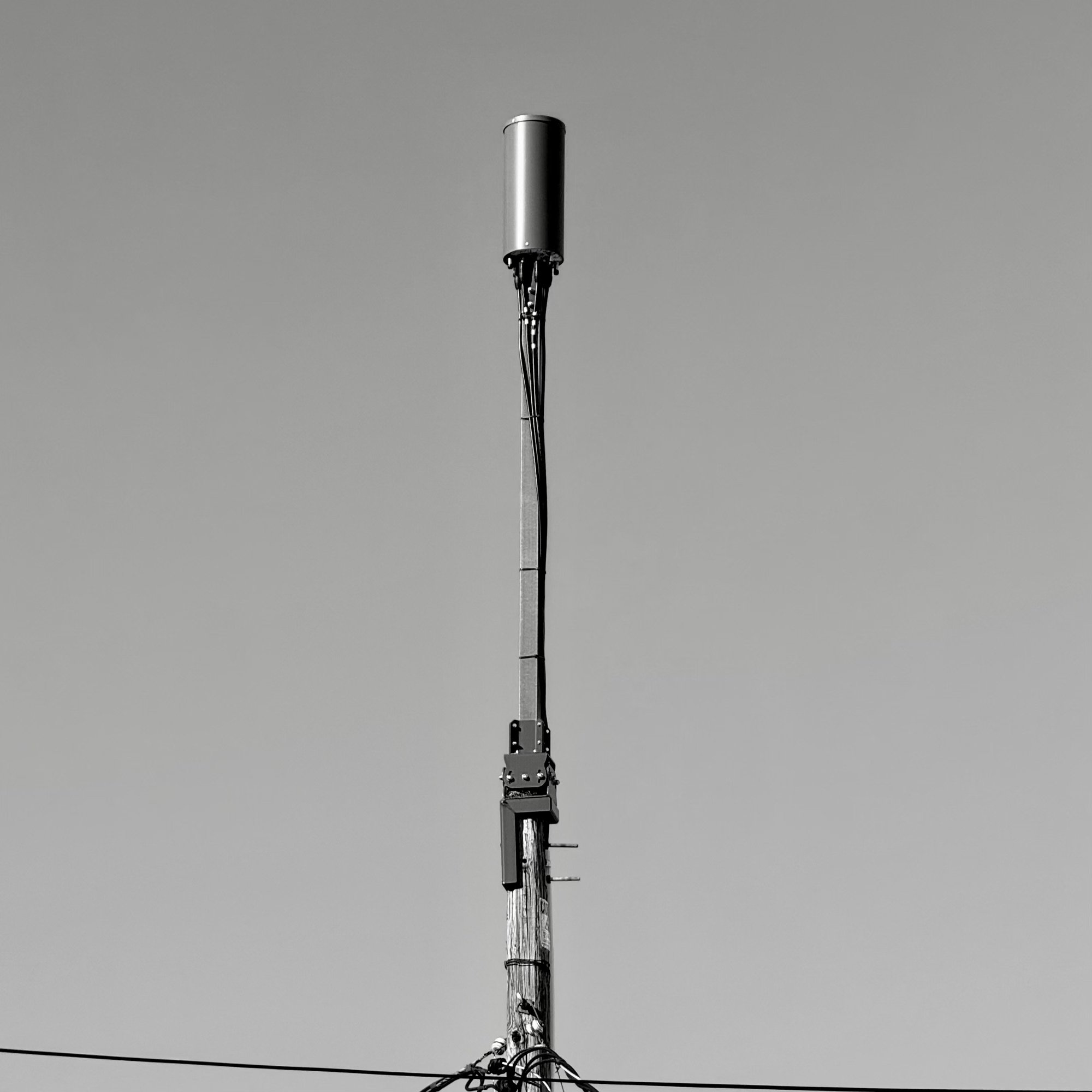
Pole-Mounted Canister (cellula urbana vas)
Pole-Mounted Stick (cellula urbana baculum)
Description
Small cell sites are compact, low-powered cellular nodes that expand network coverage and capacity, especially in densely populated urban areas. They boost wireless connectivity by handling increased data demand, particularly for 5G networks. Telecom companies install these units on existing infrastructure like streetlights, utility poles, and building facades to enhance wireless service without requiring large towers.
Each Small Cell Site (cellula urbana) generally is composed of the following parts, but each example might be different based on the installation and context.
- Antenna (various shapes, sizes, and quantity)
- Radio & Control module
- Power meter & disconnect
Identification
- Shape: Compact equipment boxes with attached antennas; varies by mounting structure.
- Material: Durable, weather-resistant metal or reinforced plastic.
- Color: Neutral tones (gray, black, or white) to reduce visual impact.
- Markings: May include small identification labels or telecom provider branding.
Pole-Mounted Canister
cellula urbana vas

Pole-Mounted Stick
cellula urbana baculum

Habitat
Small cell sites integrate into urban infrastructure, typically appearing on:
- Streetlights and Utility Poles: Mounted discreetly to improve wireless density in high-traffic areas.
- Building Facades: Attached to structures to extend coverage where needed.
- Public Structures: Installed on bus shelters, kiosks, and signage to boost connectivity in public spaces.
Range
Throughout the five boroughs.
Examples


Discussion
With the continued saturation of internet-connected devices and the rollout of 5g, cellular towers have moved from a few large bulky objects, to many smaller towers, which blanket the city. Small cells increase network reliability in crowded districts, transit hubs, and commercial zones.
These small cell sites are in opposition to the Link5g towers, which are designed to house up to five different cell sites in one co-location. These instantly became a flashpoint, and it’s not clear if additional Link5g sites will be approved and installed.
Listen to New York’s 5G Dilemma: Navigating the Future of Urban Connectivity and Public Spaces:
We explore the introduction of Link5G towers in NYC and the resulting public outcry. Learn about the technological advancements promised by 5G, the city’s rationale for these 35-foot structures, and the concerns over their impact on historic neighborhoods and the urban landscape. Engage with the complex interplay between progress and preservation in the city’s streets.


While compact, these devices change the appearance of urban infrastructure, sometimes sparking concerns about visual clutter or historic preservation. Cities, telecom companies, and communities must coordinate to ensure thoughtful deployment and transparency in placement decisions.
In NYC, as of 2025 many of the small sites are being developed and installed by Crown Castle, who recently sold their portfolio of small sites to two companies (EQT and Zayo).
Climate impacts
Small cells consume less energy than large cell towers, making network operations more efficient. Enables Smart City technology such as supporting energy-efficient traffic systems, environmental monitoring, and adaptive lighting. Visually smaller than both the Link5g and legacy cell towers, they tend to blend into the existing light pole street furniture, reducing visual clutter.
Production & deployment uses additional embodied carbon and continual electrical use, though their small size and integration into existing structures help minimize impact.


