
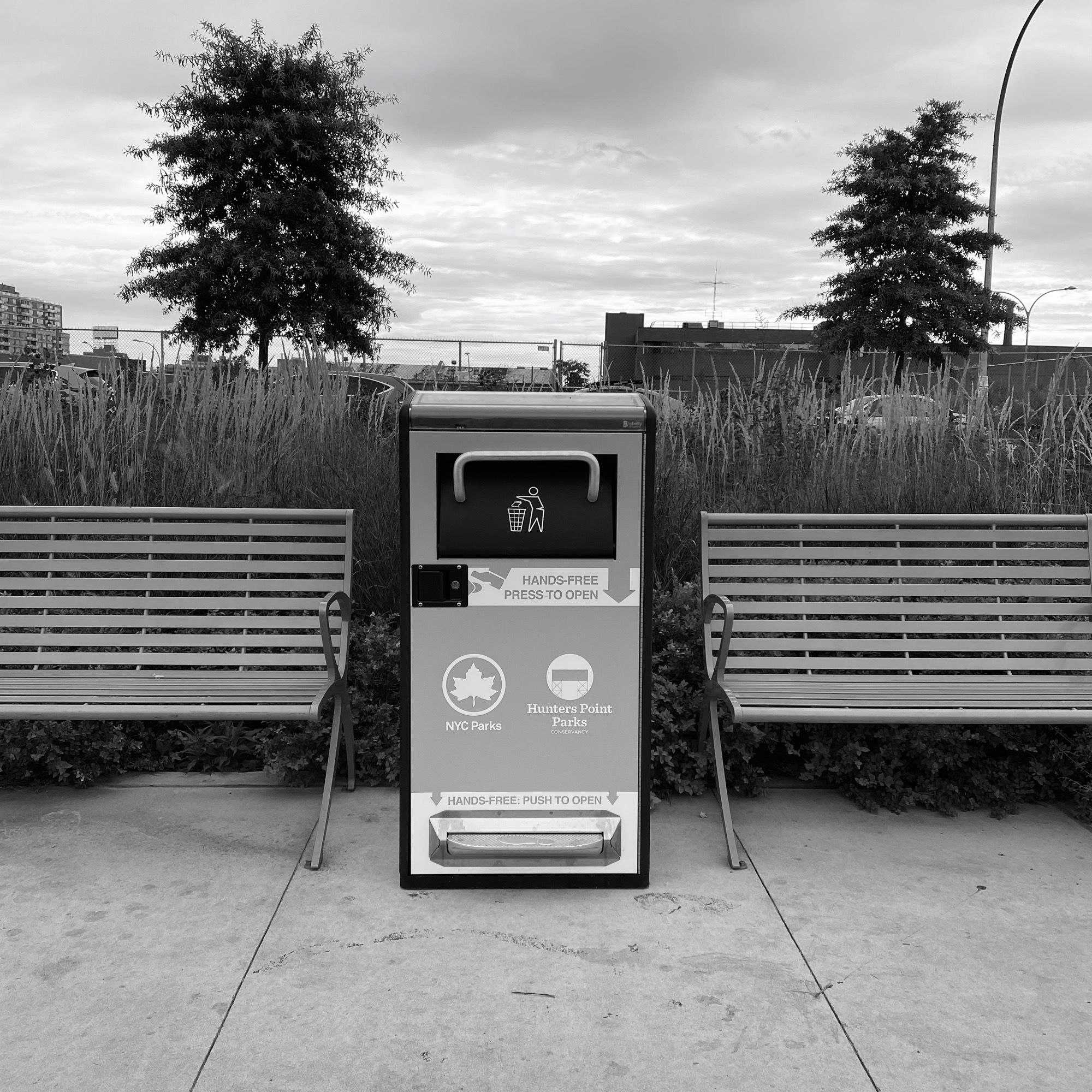


Description
The Solar-powered Compactor, commonly known as the Big Belly Bin, is a high-efficiency waste receptacle that uses solar energy to power an internal compaction mechanism. Designed to hold up to five times more waste than traditional bins, in theory it reduces the frequency of collections and improves sanitation in high-traffic areas. In reality, the flat sky-facing top becomes another place for people to put trash, and the bins often overflow like other trash receptacles.
Its fully enclosed design prevents overflow, controls odors, and deters pests, making it a modern solution to urban waste challenges.
The compactor comes in three functional variations:
- Regular Trash Compactor (premo carrum vulgaris) – The standard version for general waste.
- Recycling Compactor (premo carrum convertere) – Marked for recyclable materials, encouraging waste separation.
- Compost Compactor (premo carrum putrescat) – Designed for food scraps and organic waste, promoting sustainable disposal.

(premo carrum vulgaris)

(premo carrum convertere)

(premo carrum putrescat)
Identification
- Shape: Rectangular, upright container with a front-loading panel.
- Material: Steel exterior with a powder-coated finish for durability.
- Color: Varies by function—black or dark green for trash, blue for recycling, brown or green for compost.
- Lid: Sealed, front-facing hopper door with a foot pedal or handle for hands-free operation.
- Base: Securely mounted to the sidewalk to prevent tipping or movement.
- Markings: Features branding such as DSNY logos, recycling symbols, or composting labels depending on type.
Habitat
Thrives in high-foot-traffic urban areas such as sidewalks, transit stops, parks, and commercial districts, where reducing litter overflow is a priority. The compactors are often placed in clusters, allowing for waste separation at the point of disposal.
Range
Found throughout all five boroughs of New York City, particularly in dense commercial corridors. The Downtown Alliance and other organizations have piloted large-scale deployments, with varying levels of adoption across different neighborhoods.
Examples

Discussion
The Big Belly Bin was introduced to NYC as part of an effort to modernize waste collection, improve street cleanliness, and reduce operational costs. Its solar-powered compaction system is supposed to extend the time between collections, helping to cut down on truck trips and vehicle emissions. This doesn’t always work, as the compactors often are full, fail, or trash is left on the mostly flat top.
Equipped with wireless sensors, these bins can signal when they are full, allowing for more efficient waste management, yet it isn’t clear if these units effectively communicate status, or if DSNY can dispatch additional crews to change the bin.
Despite these benefits, adoption has been mixed. While some districts have embraced the compactors for their efficiency, others have raised concerns about maintenance costs, mechanical failures, and public confusion over the loading mechanism. DSNY has supported the existing fleet but has been hesitant to expand deployment without further evaluation.
In addition to traditional waste, some units have been adapted for food waste collection, aligning with NYC’s broader composting initiatives. These compost compactors help divert organic matter from landfills, supporting the city’s zero-waste goals.
Overall, the solar-powered compactor has seen limited implementation across the five boroughs, and it’s not clear if DSNY will be making additional investments into this type of waste receptacle.
Similar Examples


Climate impacts
The premo carrum is supposed to positively contribute to urban sustainability by:
- Reducing waste overflow, preventing litter from entering waterways and streets.
- Lowering collection frequency, decreasing the number of sanitation truck trips, and reducing greenhouse gas emissions.
- Encouraging waste separation, improving recycling rates and composting efforts.
- Using renewable energy, as its solar-powered system decreases reliance on external power sources.
Per the discussion above, it’s not clear if the solar-powered compactor is meeting these goals.
Sustainability challenges remain. The production and disposal of electronic components and battery systems introduce additional environmental considerations and difficulty of segregating this type of waste from the overall waste stream. Proper maintenance and end-of-life recycling programs are necessary to ensure the long-term viability of these compactors as an eco-friendly solution. Additionally, since these compactors themselves are composed of solar collectors, motors, etc. above and beyond other “simpler” waste receptacles, it’s not clear this added carbon footprint contributes to a better life cycle savings overall.
Further reading
- DSNY Litter Basket (Map) & DSNY Litter Basket Inventory
- DSNY Containerization RFEI (2019) – Mentions support for existing solar-powered compactors and their role in reducing vehicle miles traveled (VMT).
- DSNY Strategy Plan Update (2019) – States that DSNY completed a one-year pilot for solar-powered compactors but currently does not plan to recommend additional installations.
- Downtown Alliance Expansion (2013–2014) – Deployed 16 solar-powered compactors in Lower Manhattan, later expanded to 158 units, improving waste collection efficiency.
- Downtown Alliance Composting Program (2019) – Introduced 14 solar-powered composting bins in Lower Manhattan to reduce food waste and support the city’s zero-waste goals.
- Council Member Ben Kallos Legislation (2021) – Proposed installing at least 1,000 new solar-powered compactors across NYC to reduce overflow, deter rodents, and improve cleanliness.


